In a decision that perfectly captures the spirit of our times, Dictionary.com has announced its 2025 Word of the Year, and it’s not a word at all. It’s a number: “67.”
For anyone not deeply embedded in the latest TikTok trends, this announcement might seem confusing. What does a two-digit number mean, and how can it be a “word” of the year? The surprising answer, straight from the source and lexicographers themselves, is that it doesn’t really mean anything—and that’s precisely the point.
This selection highlights a fascinating shift in how language evolves in the digital age, driven by the humor and social rituals of Generation Alpha.
The Origin: A Lyric Without a Meaning
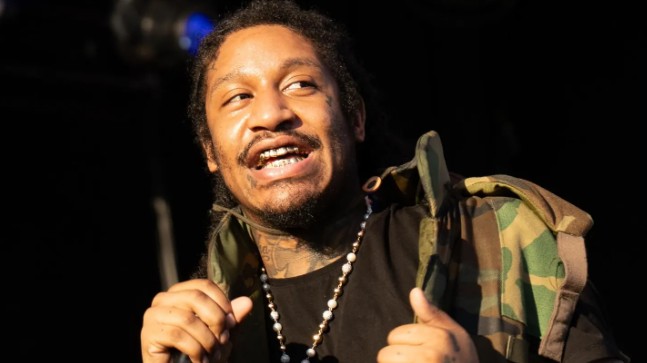
The phrase “six, seven” exploded from a 2024 song titled “Doot Doot” by the rapper Skrilla. The specific lyric is: “6-7, I just bipped right on the highway.”
From the beginning, the numbers were an abstraction. In an interview with the Wall Street Journal, Skrilla admitted, “I never put an actual meaning on it, and I still would not want to.” He suggested that this very absence of meaning is “why everybody keeps saying it.” It was a blank canvas, and the internet rushed to paint on it.
What Does “67” Actually Mean?
According to Dictionary.com’s official explanation, “67” is “part inside joke, part social signal and part performance.”
- As a Social Signal: Yelling “six, seven!” functions as a cultural password. It’s a way for mostly young people to identify each other and share a moment of chaotic, understood fun. If you know, you know.
- As a Performance: The phrase is often shouted with exaggerated energy. As Steve Johnson, Dictionary Media Group’s director of lexicography, noted, “When people say it, they’re not just repeating a meme; they’re shouting a feeling.” That feeling is often one of absurdist excitement.
- As an Inside Joke: The joke is that there is no joke. The humor derives from the sheer randomness of the phrase and the communal frenzy it creates.
The Meteoric Rise on TikTok
The trend found its ultimate home on TikTok, where over 2 million posts have used the hashtag #67. The platform has been flooded with videos of kids saying the numbers, or groups descending into frenzied screaming when someone utters them.
The trend saw a significant spike in September and October of 2025, a pattern TikTok analytics linked directly to the return to school. Classrooms became a new epicenter, with the phrase spreading through hallways and playgrounds. Some teachers have posted videos expressing comic frustration with the constant chanting, while others have cleverly co-opted “67” as a classroom engagement tactic to grab their students’ attention.
Cultural Impact and Commentary
The phenomenon of “67” has moved beyond social media and into broader cultural commentary:
- A “South Park” Parody: The trend was satirized in a recent episode of South Park. Teachers at South Park Elementary grew concerned that students were in “some kind of cult involving the numbers six and seven,” worrying about “Satanic numerology.” The show used the bit to parody both viral trends and the moral panics they sometimes inspire in older generations.
- The “Brain Rot” Debate: Critics have pointed to “67” as a prime example of internet “brain rot”—a term for low-quality, meaningless online content and its perceived negative effects. Interestingly, “brain rot” itself was Oxford University Press’s Word of the Year for 2024, showing a continued cultural anxiety about digital life.
Why Did Dictionary.com Choose “67”?
By selecting “67,” Dictionary.com is doing more than just tracking a fad. It is acknowledging a fundamental change in language creation and propagation. Words of the year have traditionally reflected major societal concerns (like “pandemic” or “existential”). Choosing a purposeless meme signals that the mood of 2025 is also being defined by pure, absurdist, communal online expression.
It recognizes that for the youngest generation, language is as much about shared experience and identity as it is about concrete meaning. A phrase doesn’t need a dictionary definition to have cultural power.
The Bottom Line
So, what does “67” mean? It means you’re in on the joke. It means you’re part of a chaotic, generation-specific moment. It means that in today’s world, a nonsense phrase from a rap song can become a nationwide inside joke shouted from school bleachers and dissected by lexicographers.
In the end, “67” is a testament to the unpredictable, hilarious, and often confusing way language lives, breathes, and transforms in the internet era. It’s less of a word and more of a cultural snapshot—and for 2025, it’s the perfect fit.