Ever wondered if there’s a health and wellness treatment that seems to pop up everywhere—from dermatologist offices and high-end spas to professional sports recovery centers and even home devices? That treatment is red light therapy. But what exactly is this glowing trend, and more importantly, how does red light therapy work from a scientific standpoint? This guide cuts through the hype to explain the mechanisms, the evidence, and the practical uses of this fascinating technology, giving you a clear picture of what it is and how it might benefit you.
What Exactly Is Red Light Therapy?
At its core, red light therapy (RLT), also known as photobiomodulation (PBM) or low-level laser therapy (LLLT), is a therapeutic technique that uses specific wavelengths of red and near-infrared light. Unlike ultraviolet (UV) light from the sun, which can damage skin, this low-wavelength light is designed to be absorbed by your skin and cells without generating heat that causes burns.
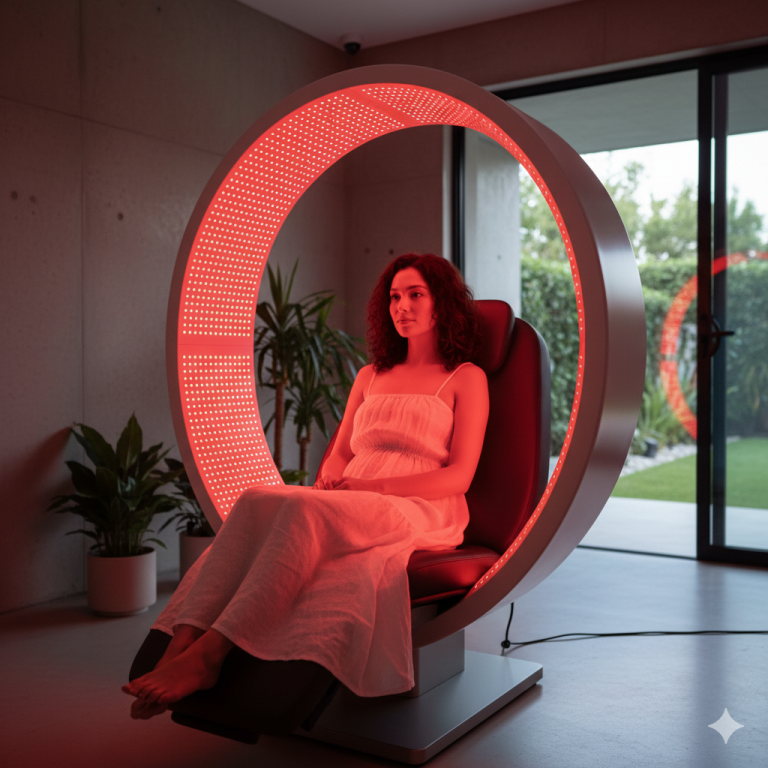
The treatment is delivered via lamps, panels, lasers, or wearable devices that emit these targeted light waves. During a session, you simply sit or stand near the device, allowing the light to shine on the area of concern. It’s non-invasive, painless, and typically has no downtime. But the magic isn’t in the light itself; it’s in how your body’s cells respond to it.
The Science: How Does Red Light Therapy Work Inside Your Cells?
This is where it gets interesting. The primary scientific explanation for how red light therapy works revolves around a tiny but mighty part of your cells: the mitochondria.
Mitochondria are often called the “powerhouses of the cell” because they produce adenosine triphosphate (ATP), the fundamental energy currency that powers all cellular functions. Think of ATP as the gasoline that makes your body’s engine run.
Here’s the step-by-step process of how red light therapy works at the cellular level:
- Light Absorption: Specific wavelengths of red (around 630-660 nm) and near-infrared light (around 810-850 nm) penetrate the skin’s surface. Near-infrared light penetrates deeper, reaching muscles, joints, and even bone.
- Mitochondrial Activation: This light energy is absorbed by a light-sensitive enzyme within mitochondria called cytochrome c oxidase.
- Boosted Energy Production: This interaction stimulates the mitochondria, helping them produce ATP more efficiently. With more cellular energy available, cells can perform their jobs better, repair themselves faster, and function more optimally.
- Cascade of Healing Effects: The increase in ATP triggers a beneficial chain reaction:
- Reduced Oxidative Stress: It enhances the activity of antioxidant enzymes, helping to neutralize damaging free radicals and reduce inflammation.
- Improved Blood Flow: It stimulates the formation of new capillaries (angiogenesis), improving circulation and delivering more oxygen and nutrients to tissues.
- Modulation of Inflammation: It influences inflammatory signaling pathways, helping to calm chronic inflammation.
- Increased Collagen & Elastin Production: In skin cells (fibroblasts), the energy boost ramps up the production of these crucial proteins, which are the building blocks of firm, youthful skin.
This cellular mechanism is the foundation for the wide range of potential benefits associated with red light therapy.
Proven and Potential Benefits of Red Light Therapy
Research supports several key applications for red light therapy, while others show promising potential. Here are the most well-studied benefits:
- Skin Health and Anti-Aging: This is one of the most evidence-backed uses. Clinical studies show red light therapy can:
- Increase collagen production, reducing fine lines and wrinkles.
- Improve skin elasticity and firmness.
- Reduce inflammation and redness, helping with conditions like rosacea.
- Accelerate wound healing and reduce scarring.
- Pain Relief and Muscle Recovery: By reducing inflammation and improving circulation, red light therapy works well for musculoskeletal issues.
- It can help relieve joint pain from osteoarthritis.
- It aids in muscle recovery after intense exercise by reducing soreness and inflammation.
- It’s used to treat chronic pain conditions like lower back pain and tendonitis.
- Hair Growth (for Androgenetic Alopecia): Multiple studies have found that red light therapy can stimulate hair follicles, leading to increased hair density and thickness in individuals with pattern hair loss in both men and women.
- Wound Healing and Tissue Repair: The cellular energy boost accelerates the repair process for surgical incisions, ulcers, and other injuries.
- Other Emerging Areas: Research is exploring its potential for improving mood and sleep (by potentially influencing circadian rhythms), treating certain oral conditions, and supporting brain health, though more studies are needed.
What to Know Before You Try It
If you’re curious about trying red light therapy, here are key considerations:
- Safety: It is generally considered safe when used as directed. It does not use UV rays and is non-thermal, meaning it shouldn’t burn the skin. Minor side effects are rare but can include temporary redness or irritation.
- Consistency is Key: Red light therapy is not a one-time miracle. Benefits accumulate over time with regular sessions, typically ranging from a few times a week to daily use, depending on the device and goal.
- Choosing a Device: You can access it in clinical settings (dermatology, physical therapy) or use at-home devices like panels, masks, or wraps. For home use, look for devices that:
- Specify their wavelengths (e.g., 660nm & 850nm).
- Have sufficient power density (measured in mW/cm²) to be effective.
- Come from reputable companies, ideally with clinical studies to back their claims.
The Bottom Line: Red light therapy works by supercharging your cells’ natural energy production, leading to a range of healing and rejuvenating effects. While it’s not a cure-all, strong scientific evidence supports its use for skin rejuvenation, pain relief, hair growth, and wound healing. As with any wellness treatment, managing expectations, choosing quality equipment, and using it consistently are the keys to seeing results.
Disclaimer: This article is for informational purposes only and is not a substitute for professional medical advice, diagnosis, or treatment. Always seek the advice of your physician or other qualified health provider with any questions you may have regarding a medical condition or before starting any new treatment.
Reference Link: Red Light Therapy: Uses, Benefits, and Risks – Healthline