
Monosodium glutamate, or MSG, is one of the most misunderstood ingredients in our food supply. For decades, it has been shrouded in controversy and associated with unfounded health fears. But what does the actual scientific evidence say? Major global health authorities and extensive research have reached a clear consensus: MSG is safe for the vast majority of people to consume.
This article cuts through the myths, explores the origins of the controversy, and presents the facts from regulatory bodies and scientific studies, empowering you to make informed decisions about this common flavor enhancer.
The Origins of a Misunderstood Ingredient
The negative reputation of MSG can be traced back to a single letter published in the New England Journal of Medicine in 1968. A doctor wrote about experiencing symptoms like weakness and heart palpitations after eating at Chinese restaurants, speculating it could be linked to MSG. This anecdote led to the coining of the term “Chinese Restaurant Syndrome.”
It’s important to understand the context. As noted by the Ajinomoto Group, rising anti-Asian sentiment in the U.S. at that time fueled this misperception, unfairly tainting both a cuisine and a food ingredient. This single letter, lacking scientific rigor, sparked a public relations crisis for MSG that persists in some circles today, despite overwhelming evidence to the contrary.
What Is MSG, Really?
At its core, MSG is simply the sodium salt of glutamic acid, an amino acid that is one of the building blocks of protein.
- Natural Presence: Glutamic acid is found abundantly in nature. Foods like tomatoes, Parmesan cheese, mushrooms, soy sauce, and human breast milk are naturally rich in it.
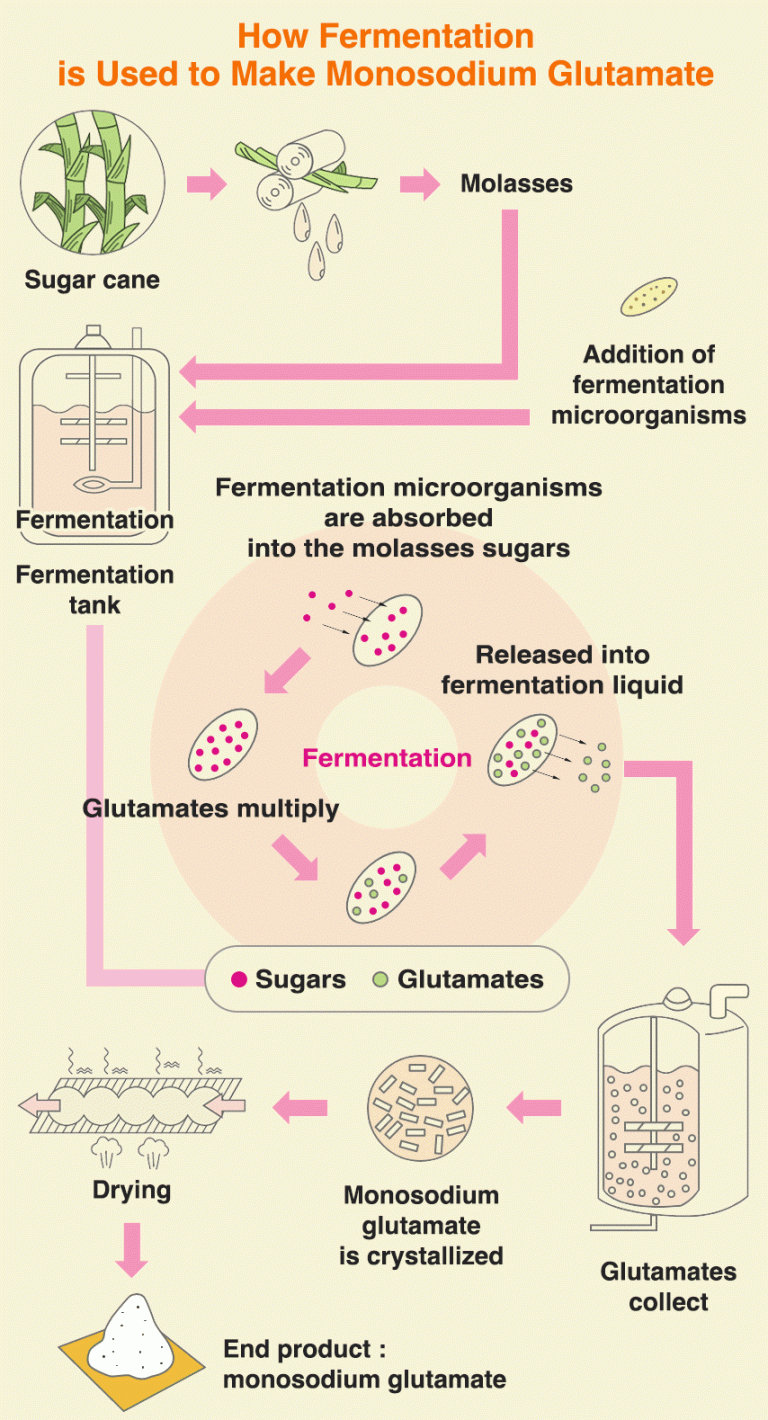
- Production: Commercial MSG is made through a natural fermentation process of plant-based sources like sugarcane, corn, or cassava, similar to how yogurt or vinegar is produced.
- The “Umami” Taste: MSG is famous for providing the “umami” taste—the savory, mouthwatering fifth basic taste alongside sweet, sour, salty, and bitter. It enhances and balances flavors, making food taste more rounded and satisfying.
Crucially, there is no chemical difference between the glutamic acid in a tomato and the glutamic acid in MSG seasoning. Your body metabolizes them in exactly the same way.
The Verdict from Science and Regulatory Bodies
Decades of research have systematically debunked the early claims against MSG. Here is what leading global authorities conclude:
- U.S. Food and Drug Administration (FDA): The FDA classifies MSG as “Generally Recognized as Safe” (GRAS), a designation given to common ingredients like salt and vinegar. After a comprehensive review in the 1990s, they found no conclusive evidence linking MSG to serious, long-term health effects.
- Joint FAO/WHO Expert Committee on Food Additives (JECFA): This United Nations body has also placed MSG in its safest category for food additives and established an Acceptable Daily Intake (ADI) of 14 mg per pound of body weight—an amount far exceeding typical consumption.
- International Headache Society: In a significant move, this society removed MSG from its list of causative factors for headaches in 2018 due to a lack of consistent evidence.
These assessments are based on the fact that humans consume 20 to 40 times more glutamate from natural foods daily than from MSG used as a seasoning.

Addressing Common Concerns and Myths
Let’s examine the specific claims often made about MSG:
Myth: “MSG causes headaches and ‘Chinese Restaurant Syndrome.'”
Fact: Controlled, double-blind scientific studies have failed to consistently replicate these symptoms. When reactions do occur in sensitive individuals, they are typically mild, short-lived, and require a large dose (around 3 grams on an empty stomach) that is much higher than the amount found in a typical serving of food. The FDA states it has “not found any evidence” that MSG causes these effects.
Myth: “MSG is bad for your brain.”
Fact: Glutamate is a vital neurotransmitter in the brain. However, dietary glutamate (from food or MSG) does not cross the blood-brain barrier in significant amounts. The brain produces the glutamate it needs internally. As Healthline notes, “overall, no compelling evidence suggests that MSG alters brain chemistry when consumed in normal amounts.”
Myth: “MSG causes obesity or metabolic disorders.”
Fact: Early animal studies that injected extremely high doses of MSG (not consumed orally) led to this hypothesis. However, human studies show no consistent relationship between dietary MSG and obesity. In fact, because it enhances savory flavor, MSG can be used to reduce sodium in foods by up to 40% without sacrificing taste, potentially benefiting heart health.
MSG Sensitivity: A Rare Possibility
While MSG is safe for the general population, a very small subset—estimated at less than 1% of people—may experience transient sensitivity. Symptoms, if they occur, might include mild flushing, warmth, or drowsiness when consuming very large doses (3 grams or more) on an empty stomach.
For context, a typical serving of an MSG-seasoned soup might contain 0.5 grams. If you suspect you are part of this tiny minority, the recommendation is simple: avoid foods with added MSG. The FDA requires MSG to be listed on ingredient labels, making it easy to identify.
The Practical Benefits of MSG
Beyond safety, MSG has practical culinary and health advantages:
- Flavor Enhancement: It boosts the savory, meaty flavors in soups, stocks, marinades, and vegetable dishes, making simple ingredients taste more complex.
- Sodium Reduction: This is one of its most significant benefits. By providing satisfying umami taste, MSG allows you to cut salt (sodium chloride) by 30-40% in many recipes while maintaining delicious flavor, which can support better blood pressure management.
The Bottom Line
The decades-long fear surrounding MSG is a case study in how anecdote can overshadow science. The collective judgment of international regulatory bodies, independent researchers, and health experts is clear and consistent.
For the overwhelming majority of people, MSG is a safe ingredient that can be enjoyed as part of a balanced diet. It is not an allergen, a neurotoxin, or a cause of chronic illness. It is a natural tasting agent that comes from plants, enhances our food, and can even help us eat less sodium.
You can confidently enjoy the umami depth it brings to your favorite dishes, knowing the science firmly supports its safety.
Disclaimer: This article is for informational purposes and is based on the provided sources and current scientific consensus. It is not intended as individual medical advice. If you have specific health concerns, please consult with a healthcare professional.